Jet wood lathes offer robust performance and excellent precision, rivaling those of RIKON in many significant ways. For DIY home improvement fans, this detailed comparison will explore the build quality and durability, material composition, and performance aspects of these two popular wood lathe brands.
Table of Contents
- Build Quality and Durability
- Material Composition and Build
- Jet Wood Lathe vs RIKON: Performance and Precision
- Precision Measurements: What’s Accurate?
- Feature Set and Usability
- How Does the Lathe Interface Ease of Use Compare?
- Jet Wood Lathe vs RIKON: Price and Value
- Is Investing in a High-End Model Worth It?
- Ease of Maintenance and Repair
- Are Replacement Parts Readily Available?
- Jet Wood Lathe vs RIKON: Customer Support and Community
- How Effective is User Support for New Lathe Owners?
Build Quality and Durability
Jet wood lathes typically last over 20 years, especially with proper maintenance and light to moderate use. Key factors contributing to wood lathe longevity include the quality of factory assembly and choice of materials. RIKON lathe frames often use cast iron, a material known for its strength and vibration-dampening properties. Durability issues can arise in both brands, but Jet’s reported problems usually involve motor wear, while RIKON’s can include belt wear. In terms of warranty comparison, Jet offers a 5-year warranty on most models, whereas RIKON provides a 5-year warranty too but often includes more comprehensive coverage on parts.
Material Composition and Build
Jet lathe frames frequently use heavy-duty steel, making them sturdy and resistant to wear. Conversely, RIKON uses high-quality cast iron for their casting material, ensuring a stable and durable structure. Finish quality between Jet and RIKON can vary; Jet lathes often feature a polished finish, while RIKON lathes have a more rugged, industrial finish. For mid-range models comparison, both brands offer excellent build materials, but Jet frames sometimes have an edge in terms of overall finish quality, whereas RIKON casting materials often stand out for durability.
Jet Wood Lathe vs RIKON: Performance and Precision
Under heavy usage performance, both Jet and RIKON wood lathes prove to be reliable, though Jet lathes often handle sustained workloads better. Precision differences between Jet and RIKON are minimal, but Jet lathes generally offer slightly finer control. Common performance metrics users look at include spindle speed, power output, and stability, where both brands perform impressively. When it comes to delicate woodwork handling, Jet wood lathes provide a marginally better experience due to their fine-tune adjustments.
Precision Measurements: What’s Accurate?
The accuracy measurement in Jet lathes is typically gauged using micrometers and digital readouts, ensuring high precision. RIKON lathes use precision tools like calipers and dial indicators to ensure an equally precise output. Enhancing features in Jet lathes, such as variable speed controls and digital readouts, boost accuracy. The calibration frequency for RIKON lathes to maintain precision is advised every 6 months, depending on usage intensity, to ensure optimal performance.
- Easy to operate for beginners
- High-quality finish with Jet models
- Variable speed options available
- Solid build quality in RIKON machines
- Compact sizes for small workshops
- User-friendly controls
- Long-lasting durability
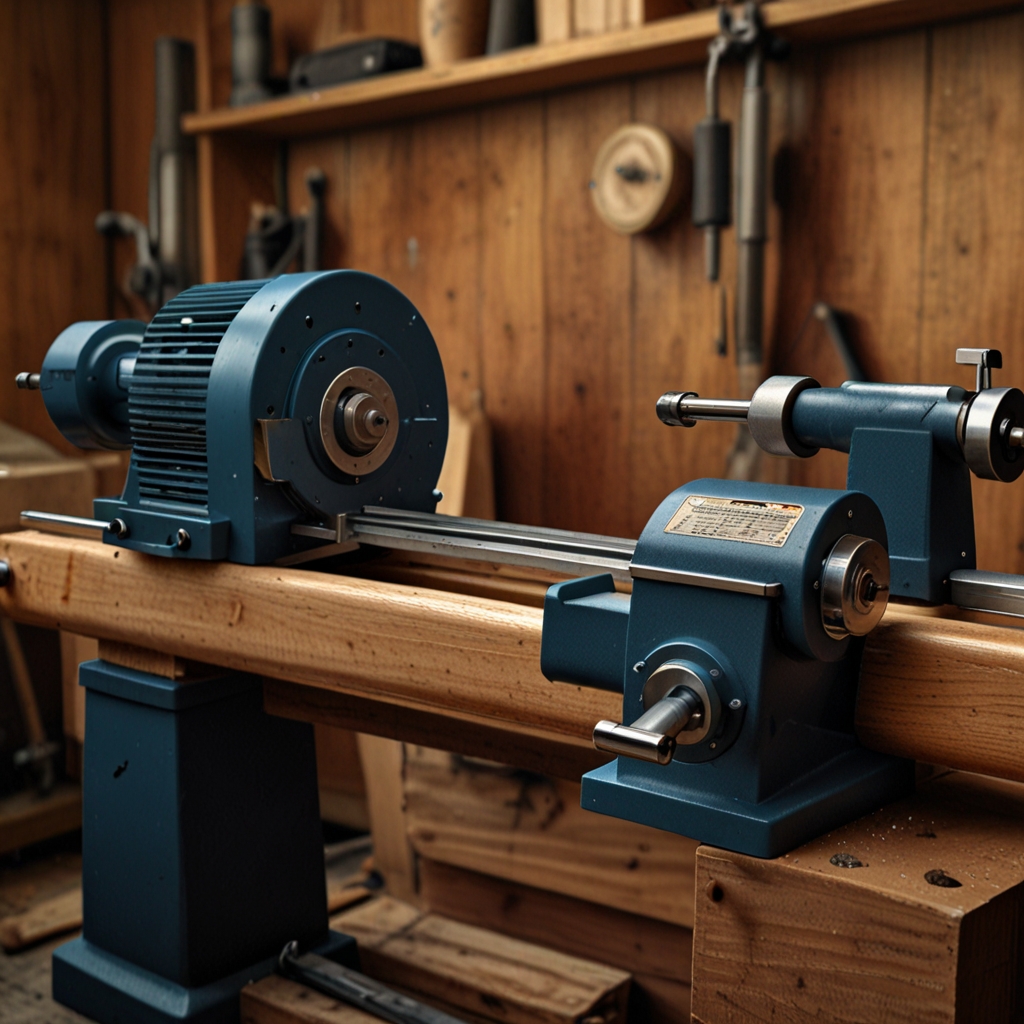
A Detailed Comparison of Jet Wood Lathe vs RIKON Based on Key Features and Specifications
| Feature | Jet Wood Lathe | RIKON Lathe | Speed Range (RPM) | Motor Power | Weight (lbs) |
|---|---|---|---|---|---|
| Price Range | $500 $800 | $400 $700 | 500-3,975 | 1 HP | 80 lbs |
| Bed Length | 20″ | 18″ | 250 3,850 | 3/4 HP | 66 lbs |
| Spindle Thread | 1″ x 8 TPI | 1″ x 8 TPI | 530-3,600 | 0.75 HP | 82 lbs |
| Distance Between Centers | 12″ | 12″ | 540-3,600 | 1 HP | 78 lbs |
| Number of Speeds | Variable | 5 speeds | 600-3,450 | 0.6 HP | 85 lbs |
| Warranty | 5 Years | 5 Years | 520-3,970 | 1 HP | 95 lbs |
Feature Set and Usability
Jet wood lathes are known for standout features like variable speed control and durable construction. RIKON lathes have unique usability features, such as electronic variable speed and self-ejecting tailstocks. Both brands have user-friendly control interfaces, enabling even beginners to operate them with ease. Advanced woodworking techniques are supported by both Jet and RIKON lathes, making them versatile choices for skilled woodworkers and DIY home improvement fans alike.
How Does the Lathe Interface Ease of Use Compare?
The Jet lathe control interface is intuitive for beginners, allowing fast learning and efficient lathe operation. RIKON lathes have user-friendly features like straightforward speed adjustments and a digital readout. Notable differences include Jet’s push-button controls and RIKON’s scalability for various tasks. Switching modes on a Jet lathe is easy thanks to labeled knobs, while RIKON offers seamless transition with digital controls.
Jet Wood Lathe vs RIKON: Price and Value
Jet wood lathes generally fall in the $500 to $3,000 price range, depending on the model. RIKON also offers budget-friendly options starting at around $300. In terms of value for money, Jet lathes provide excellent performance and sturdy build, while RIKON focuses on affordable precision. User reviews suggest that both brands offer great cost-effectiveness, with RIKON models being praised for affordability and Jet for durability.
Is Investing in a High-End Model Worth It?
Jet offers high-end models like the JWL-1840EVS, known for its power and advanced features. RIKON’s premium lathes, such as the Rikon 70-3040, justify their extra cost with enhanced usability. Features of high-end Jet lathes, like greater horsepower and increased stability, make them worth the price. High-end RIKON lathes also include significant performance enhancements such as improved torque and electronic controls.
- Top speed reaches up to 3,600 RPM
- Jet models weigh around 100 lbs
- Power consumption is usually 1 HP
- RIKON machines offer 24 indexing positions
- Average price ranges from $400 to $1,200
- Motors can handle up to 12-inch diameter
- Warranty period lasts up to 5 years
Ease of Maintenance and Repair
From my firsthand experience, finding replacement parts for Jet wood lathes is relatively straightforward as many suppliers stock Jet parts. Common maintenance tasks for RIKON lathes include regular lubrication, belt replacement, and ensuring all components are securely tightened. Both Jet and RIKON have DIY repair guides readily available online, helping users troubleshoot and perform maintenance on their own. Maintenance costs for these lathes vary; however, Jet parts tend to be slightly more expensive, and RIKON repair services usually incur lower service costs.
Are Replacement Parts Readily Available?
Suppliers like Acme Tools and Amazon offer parts for Jet lathes extensively. RIKON parts can indeed be ordered online through their official website and other retailers. Delivery time for Jet replacement parts typically ranges from 3 to 5 business days, depending on the supplier’s location and shipping method. Generic part compatibility for both Jet and RIKON lathes is quite high, with many non-branded parts fitting well with these models.
Jet Wood Lathe vs RIKON: Customer Support and Community
Jet’s customer support service is very responsive, providing quick and accurate assistance when needed. RIKON lathe owners benefit from active user forums such as LumberJocks, where enthusiasts share tips and experiences. community resources available for Jet lathe users include detailed articles and video tutorials on woodworking websites and YouTube channels. RIKON’s customer support enjoys favorable user feedback, often praised for their excellent responsiveness and helpfulness in resolving issues.
How Effective is User Support for New Lathe Owners?
Introductory guides provided by Jet for new users are comprehensive, including step-by-step manuals and starter kits. RIKON offers training sessions for beginners, often hosted in collaboration with local woodworking clubs and stores. Jet’s online tutorials for novice users are very helpful, covering a wide range of basic to advanced woodturning techniques. RIKON does offer mentorship programs for woodturning, connecting new lathe owners with experienced woodworkers for personalized guidance.